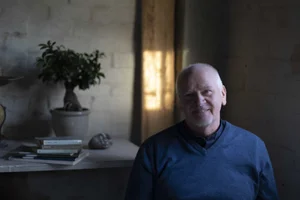
Solas Interview for PEP Podcast: (Persuasive Evangelism Podcast)
1) You’ve moved into a life of hospital chaplaincy work. That’s an important part of the church’s work across the country – but something that probably doesn’t get much attention. Why did you go down that route, rather than a more conventional parish or congregational ministry?
I actually had a phobia about Hospitals. In Ordinand training, I dreaded the ‘Chaplaincy’ placement. I’ had been in Hospital for 8 months age 23 after a serious RTA. It left me paralysed. When I was in the Spinal Injuries Unit, the Chaplains visited. They were a great support, pastoral, spiritual and relational. Fast Fwd to my Curacy and there was a Hospice & a Hospital in the Parish and my ‘training Vicar’ suggested I volunteer as a healthcare Chaplain as part of my ministerial formation. At the end of 3 years as a curate, I realised the two areas that enlivened me were - 1. Mission work and 2. Chaplaincy.
An opportunity opened up at Leeds Teaching Hospitals under Rev Dr Chris Swift. I studied for a MTh (Chaplaincy) at Cardiff University (2010).
2) Can hospital chaplaincy be genuinely evangelistic, as you have mentioned proselytising is not allowed in many settings (but you can answer faith-led questions)? (In pastoral contexts the church is looking after its own, rather than reaching out beyond its own members). Generic ward visits ViP.
Wisdom, humility, gentleness, kindness are all important traits of a good a Hospital Chaplain. Being bold, confident, mansplaining faith are not what Healthcare chaplaincy is about (that’s rude). Having a hidden agenda of converting would be an abuse of your role as Chaplain. Patients are vulnerable adults, the chaplain can’t have an agenda of proselytising (that’s abuse). By listening and responding to things they may bring up, it can lead to people turning to our Lord Jesus at their time of need.
3) You mention small acts of kindness being part of your role. Can you say more about that and do you think those more important than people realise?
There’s no formula but, responding to each situation, Matt 5:41 ‘Go the extra mile.’ Eg clean glasses. Eg Notice their cards and drawings on their bedside table – show genuine interest, invite them to tell the story of their family. Eg Chelsea flag – MS patient ‘Matt’ opened the door to beautiful encounters & prayer and a good preparation for End of Life. Being tactile is important when appropriate – eg holding hand in comfort.
4) What are some of the joys and challenges of Chaplaincy work?
Special Encounters – draw alongside people at time of need. Trust is very important. Chaplains in partnership with Staff on MDTs & Training is vital. MDT = Multi Disciplinary Teams. Chaplains can reach out to Christians on staff (eg KB’s Prayer Blog) encourage them in their witness.
There are many Challenges. NHS cut backs. Some staff who have no faith think chaplaincy is a waste of space. Nat Sec Soc & Brit Hu Assn don’t believe Chaplaincy should be spiritual caring (just pastoral).
5) What have been the highlights of this kind of ministry for you? Are there any stories of people coming to faith you can share?
Donald a feisty businessman – ‘I should be alright when I get to the other side.’ ‘It’s not about what you have done, it’s about what Jesus has done for you!’
Peter Smith. Sometimes you just connect, a chemistry. I took HC to ‘lady friend’ on another ward and she asked me to visit Peter. A beautiful friendship ensued.
6) What are the sensitivities of sharing your faith with the sick and vulnerable. Obviously Christians believe that people are more than their physical bodies and loving people holistically will mean looking after their souls as well as their physical and medical needs – and for us that means sharing the life and hope that we have found in Christ. Equally we don’t want to exploit people’s vulnerabilities in a manipulative way. How do we get that right? What are some eg’s of best -practice in that area?
Chaplain sees themselves as part of the multidisciplinary teams that provide holistic care to each patient. The whole person is body, mind spirit intertwined. A good chaplain will work with the ward staff, pausing to check-in with charge nurse, eg saying ‘I am going to visit Mrs S in D bay, anything I should know before I visit?’
If people are near EoL (end of life) often the family will engage with you about the patient’s faith. You can ask open questions that help you respond eg Say dad (Bill), age 85 is EoL you can ask – ‘Did Bill talk much about his faith?’ That is more open than, ‘Is Bill a Christian?’ They can respond I many ways – Well he did go to church etc… he was a choir boy etc… He went forward at Billy Graham’s mission etc… You can take whatever they give to help Bill at his EoL. Then you speak Bill with that info,
E.g. “Bill they tell me you were a choir boy, would you like me to share Ps 23 or recite a Hymn or Romans 8:35 ‘who can separate us from the love of Christ.’ In those situations, it is the professionalism and confidence of the chaplain that puts Family at ease.
Best Practice wrt Praying for or with someone is always to offer a choice. Would you like me to say a prayer before I go, or shall I wait till I get back to the chapel? A Choice gives them control of the situation, rather than you imposing your suggestion on them.
7) Related to that is how you manage the tension between offering support (and ultimately the promise of salvation) with someone perhaps hoping they might be healed? I know this is something that is very personal to you, because of suffering your own paralysis in your twenties, and your mother being someone involved with faith healing. You mentioned feeling like an ‘emotional pin cushion’ when you weren't healed.
I’m still open to healing! It’s not often spoken about that people who are prayed for and remain the same, can be left in a mess mentally, while the able person walks away & forgets about it. It is vey important to be sensitive when we are praying for physical healing. Avoid the temptation to counsel why it hasn’t happened (eg you may be holding a grudge, there may be sin in your life, you have not enough faith) – these are body blows when someone has been prayed for and remains unwell.
Ask the person how they are after the prayer, listen, care – have compassion – not harsh or rude or abusive.
8) Has being in a wheelchair yourself opened up opportunities in a different way, because people in hospital understand you have experienced physical suffering?
Assumed Empathy. Eye to eye.